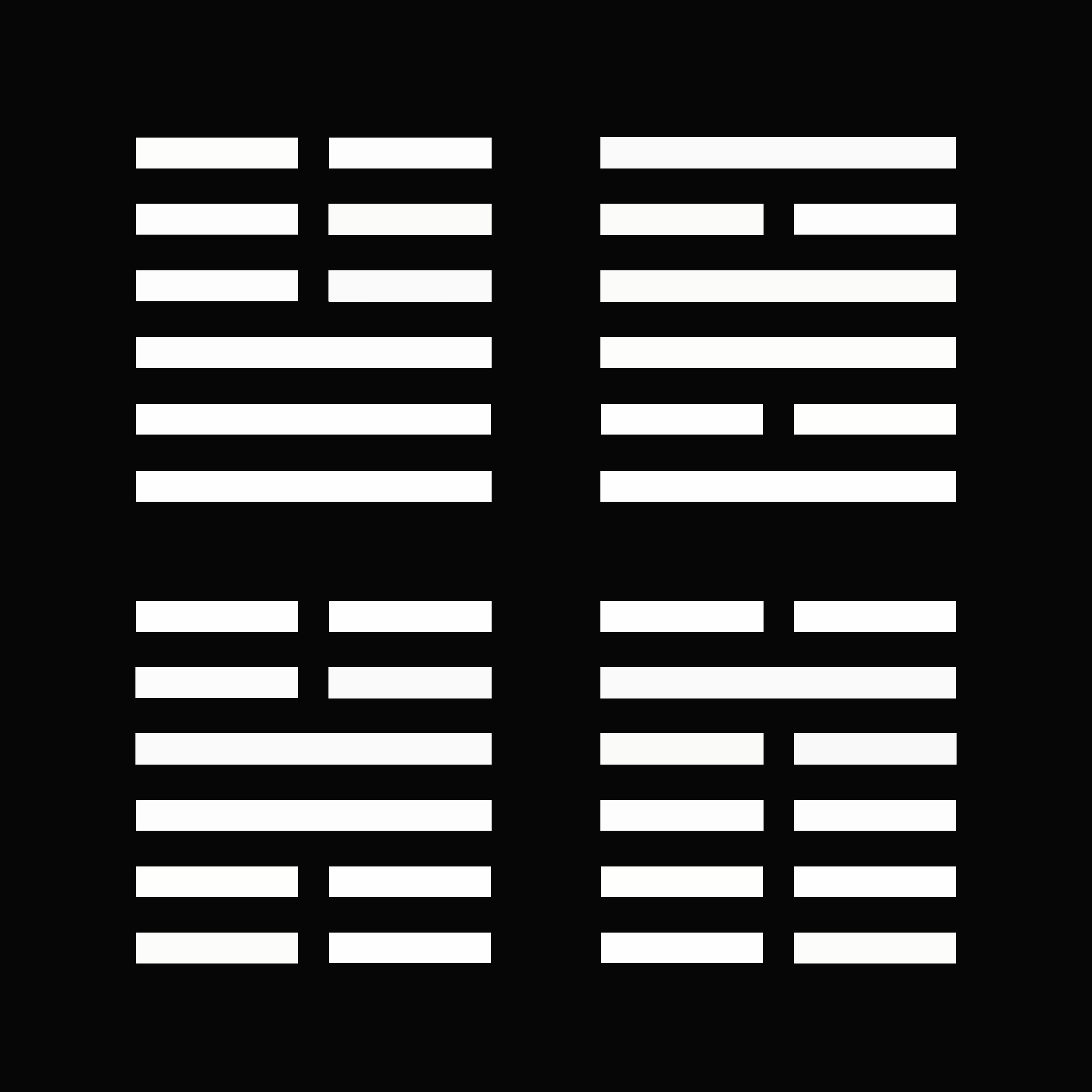
Lot text is the wording used to resolve a question after a lot has been drawn, and because it is usually written in verse it is also called lot verse. It is not a one-word fortune grade but three layers of information — poem, allusion and commentary — and reading only the grade is like compressing a whole passage into a single word.
San Shan Guo Wang is a local cult of the Chaoshan region, and the oracle lots of its temples are still passed down in Chinese communities in Hong Kong, Macao and Southeast Asia. Drawing a lot does not end when a stick falls out: reporting the matter, shaking the container and confirming the result are the usual steps, and skipping the confirmation usually means you have simply picked up a stick that suits you.
The Major Arcana are the 22 tarot cards that carry no suit, numbered 0 to 21, with 0 being the Fool. Readers often string them into one journey from setting out to completion as a memory aid; editions differ in how they number Strength and Justice, and that is a difference of edition rather than a mistake in reckoning.
A tarot deck is built from 22 Major Arcana and 56 Minor Arcana, 78 cards in all. A spread breaks a question into positions, and the more positions there are the clearer the question has to be; many people pick the wrong spread because the question itself has not yet taken shape.
Ti and Yong are the core coordinates of Mei Hua Yi Shu: the Ti trigram stands for the side of the person asking and the Yong trigram for the side of the matter being asked about. The method reasons mainly from the inner and outer trigrams, the Ti and Yong trigrams, the nuclear and changed trigrams and the line texts, and once Ti and Yong are mixed up, none of the layers after them can be read.
Mei Hua Yi Shu, one of the two branches of I Ching divination in common use today, needs no coins: numbers can be taken from the time, from figures in front of you, or from an external sign. Speed is its advantage, but speed does not mean any number will do.
In Da Liu Ren, which belongs to the same Three Styles, the first of the Three Transmissions is also called the active use, or the useful element, and in Qi Men the same step comes first. Choose the wrong useful element and every later layer fails to line up; the ways of choosing it differ between systems, so it is worth asking which set the other person is using.
A Qi Men Dun Jia chart sits on the nine-palace square of the Luo Shu, and three layers are stacked over it: the nine stars of the heaven plate, the eight spirits of the spirit plate, and the fixed trigram directions of the earth plate. When reading, learn the squares (the nine-palace grid) first, then the layers; jumbling the three together is the most common place beginners stumble.
In Liu Yao the Self line marks the position of the person asking and the Response line the side opposite them, and how the two relate is the core of reading any matter that involves people. Bring in the Six Relatives and the five phases' generation and control and a full picture forms; settle for a single word of good or bad luck, and the whole chart is reduced to one character's worth of conclusion.
Casting a Liu Yao hexagram is six tosses of three coins, one line recorded each time, from the bottom upwards. This article walks through the usual steps, explains what dressing the hexagram with Na Jia adds, and why the question matters far more than the tossing.
The four transformations of Zi Wei Dou Shu — Hua Lu, Hua Quan, Hua Ke and Hua Ji — are derived from each palace's heavenly stem rather than being stars in their own right. This article explains what they mark, how the San He and Fei Xing schools use them differently, and why Hua Ji is not bad luck.
The twelve palaces are the fixed framework of a Zi Wei Dou Shu chart, with the Life Palace as the starting point. This article explains how the other eleven map onto different areas of life, why a palace is read through its relations with San Fang Si Zheng rather than on its own, and why an empty palace is not a gap in a person's fate.